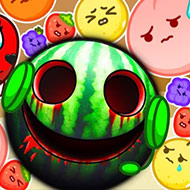
Do NOT Make a Watermelon looks like every other fruit-merging puzzle game at first glance, right up until the instructions flip the whole genre on its head: the watermelon, the fruit every similar game treats as the finish line, is the one outcome this game wants a player to avoid entirely.
A Merge Game With Its Goal Turned Upside Down
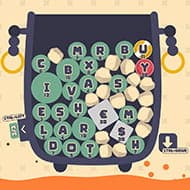
The core mechanic will feel immediately familiar to anyone who’s played a falling-fruit merge puzzle before: smaller fruits and objects combine into larger ones when they touch, chaining together into bigger results as a board fills up. Do NOT Make a Watermelon keeps that combining mechanic intact, but the actual objective is survival rather than completion — the “forbidden goal” is producing a watermelon at all, and the entire point of a session is lasting as long as possible without that fusion ever happening.
That single inversion changes how every placement decision feels. In a standard merge game, chaining two big fruits together is a win. Here, that same chain reaction is a threat, since letting two large enough pieces touch risks accidentally producing the one result the game is built around preventing.
There’s no fixed ending point to reach. Instead, the game measures success purely by survival time, and a session just keeps going — and the board just keeps getting more crowded and harder to manage — until the watermelon finally happens or the board fills up entirely.
Chain Reactions That Punish Carelessness
Because merges can cascade unexpectedly, placing one item can trigger a chain of combinations across the board that a player didn’t fully plan for. A single careless placement in a crowded board can set off a sequence that ends a long survival run in a few seconds, which is exactly the tension the game is built to create.
Levels also get progressively less forgiving. As a run continues, the available space tightens and merges happen faster, meaning the same placement that was safe a minute earlier can become genuinely risky once the board has filled in around it.
The common mistake for new players is treating this like a standard merge game on autopilot, dropping pieces wherever convenient the way they would if bigger fruit were the goal. That habit is exactly backwards here, and it’s usually what ends a first attempt early.
Corner Control and Playing for Time, Not Completion
Corner control is the most commonly cited strategy for this game — keeping fruit placement concentrated near the edges and corners of the board limits how many directions an uncontrolled chain reaction can spread in, compared to placements near the open center.
Space awareness matters just as much as placement itself. Because the board only gets tighter as a run continues, planning two or three moves ahead rather than reacting to just the current piece is what separates a short run from a long one.
Deliberate pacing — resisting the urge to place pieces quickly just to keep the board moving — is the other piece of common advice, since rushed placements are disproportionately likely to trigger the exact chain reaction the whole game is asking a player to avoid.
Why the Inversion Works
Merge puzzle games built around reaching a specific “final” fruit have become common enough that most players immediately understand the genre’s rules on sight. Do NOT Make a Watermelon leans directly on that familiarity, using a player’s existing instincts against them — the very same reflexes that would help someone win a standard merge game are the reflexes that get a player caught out here.
That’s really the whole appeal in one idea: a genre with a well-worn goal, and a single rule change that turns every previously “good” move into a potential mistake.
A Horror Twist Bolted Onto a Familiar Formula
Do NOT Make a Watermelon leans on the same falling-fruit format popularized by Suika-style merge games, but it isn’t just a stricter version of that formula with a stern warning label — actually producing the watermelon is played for a genuine horror beat rather than a plain “game over” screen. Players who’ve documented full runs describe the moment the forbidden fruit finally appears as something meant to unsettle rather than just end the session quietly, which reframes every near-miss earlier in a run as building toward an actual scare rather than just a missed high score.
That horror framing is also why the game has circulated heavily through gameplay videos rather than static reviews — a genre twist that only pays off in a specific, well-telegraphed moment tends to spread through recorded reactions to that moment more than through written descriptions of the mechanic alone.
Comparing Runs Instead of Chasing a Final Score
Because there’s no fixed level list or stage-complete screen, most of what players compare between sessions comes down to survival time or a running point total, tracked purely against a player’s own earlier attempts rather than an in-game leaderboard structure. That framing keeps the format close to its Suika-style roots, where the appeal was always about a single long, tense session rather than discrete levels to clear one after another.
It’s also part of why the game keeps getting rediscovered through gameplay clips rather than fading after an initial release — a session with no fixed endpoint is easy to jump back into for “one more run,” and the horror payoff waiting somewhere in that run gives every attempt a reason to keep going a little longer than the last one, even for players who’ve already seen how the moment plays out and are really just watching a friend or a streamer walk into it fresh.
Do NOT Make a Watermelon takes a genre built around chasing one specific fruit and turns that fruit into the thing every player is quietly dreading instead, and once corner control and careful pacing start to matter more than speed, the game stops feeling like a simple merge puzzle and starts feeling like a countdown a player is actively, nervously trying to postpone for as long as their nerve holds out.