There is no official The Choicer Voicer 2 yet — nothing has been announced, and nothing here should be read as a leak or an insider report. What follows is speculation about what a numbered sequel could plausibly look like if it built directly on the original’s judged vocal-impression format, reasoned out from the systems the first game already has in place.
What The Choicer Voicer 2 Would Have to Start From
The original game’s whole identity rests on a simple structure: a panel of judges scores a player’s attempt to recreate an audio clip, with one to four players taking turns in a studio setting. Returning players from The Choicer Voicer will recognize that core loop immediately if a sequel keeps it intact, since replacing the judged-impression format with something else would essentially make it a different game wearing the same name. A natural next step for The Choicer Voicer 2 would be treating that judging loop as the foundation to build outward from, rather than something to reinvent.
The first game also leans heavily on its content-pack system — voice packs, judge packs, studio packs, host packs — all built around dropping audio files into a folder. Any sequel would likely need to either carry that pack format forward unchanged, so existing community content stays usable, or offer some kind of conversion path. Breaking years of community-made voice packs on day one of a sequel seems like the kind of decision that could cost The Choicer Voicer 2 goodwill before it even launches, so backward compatibility with existing packs is a reasonable assumption to make about its priorities.
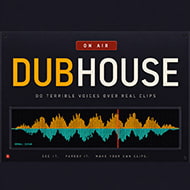
Dub Mode and its Freestyle variant are the other pillar worth carrying forward. Since Dub Mode already exists as the lower-stakes, non-judged alternative to the studio format, a sequel built on the same foundation would plausibly keep that split between competitive and creative modes rather than merging them into one.
What Might Finally Get a Real Fix
The most persistent complaint about the original game is its recording issue — microphones sometimes failing to capture audio at all, tied to how the underlying engine handles certain surround-sound setups. If The Choicer Voicer 2 moves to a newer engine version or a different audio backend entirely, fixing that bug (or at least reducing how often it shows up) would probably be one of the most requested changes a sequel could make, given how directly it undermines a game whose entire premise depends on a working microphone.
One plausible addition, purely speculative, would be some kind of built-in microphone diagnostic step before a session starts — a simple check that confirms audio is actually being captured, rather than a player discovering the problem three rounds into a match with friends. Call it a “Mic Check” screen for the sake of discussion; nothing like this exists in the original, and there’s no indication one is planned, but it would directly address the single biggest complaint attached to the first game.
Multi-microphone support is the other likely candidate for attention. The current workaround — rerouting audio through a virtual device — does not cleanly support two separate microphones feeding into the same round, which is a real limitation for a local party game built around groups. A sequel investing in native multi-mic handling would be addressing a problem the community has already run into directly, rather than inventing a new feature nobody asked for.
Where The Choicer Voicer 2 Could Plausibly Expand the Format
Beyond fixing what’s broken, a sequel has room to build on what already works. One reasonable direction: some kind of head-to-head or paired mode where two players share a single clip and have to react to or riff off each other’s take before the judges score them — a speculative mode that could be called something like “Tag Team Dubbing,” extending the existing Dub Mode concept rather than replacing it with an unrelated system.
The Twitch-focused mode in the original, where chat commands feed directly into a round, could plausibly grow into something with persistent standings across multiple streams — a running ladder of viewer performances rather than a one-off segment that resets every time. This kind of feature would appeal to players who enjoyed the original’s streamer-focused content packs and were already treating individual streams as one long-running show rather than isolated sessions.
It’s also worth acknowledging what a sequel probably would not need to touch: the low-effort voice-pack creation process. Dropping audio files into a folder is about as accessible as a modding pipeline gets, and it’s plausibly a big part of why the original has any community content at all this early in development. There’s little reason to assume The Choicer Voicer 2 would complicate that on purpose.
What This Speculation Is Not Claiming
None of the mode names above — Mic Check, Tag Team Dubbing, or a persistent Twitch ladder — exist in The Choicer Voicer as it currently stands, and none of them should be mistaken for confirmed features of a sequel that, again, has not been announced. This is reasoning about plausible directions based on the original’s real systems and its most commonly reported problems, not a preview of anything in development.
A sequel could just as easily go in a completely different direction, focus on different pain points, or never materialize at all. The value of this kind of speculation is in understanding what made the first game distinctive enough to build a sequel around in the first place — not in predicting a specific roadmap.
If The Choicer Voicer 2 ever does get made, the safest bet is that it keeps the judged vocal-impression format and the pack-based customization that define the original intact, while spending its effort on the microphone reliability issues and multi-mic support that players actually ran into. Anything beyond that — a Tag Team Dubbing mode, a persistent Twitch ladder, or anything else floated here — is a guess about where The Choicer Voicer 2 could go, not a report of where it is going.