What happens when a boss fight in Lexispell throws out the one rule you assumed was fixed — that a letter means what it always means? That’s the moment most new players stall out, staring at a cauldron where every valid word suddenly has to repeat a single letter, with no warning it was coming.
Merging Tiles and Building Multipliers in Lexispell
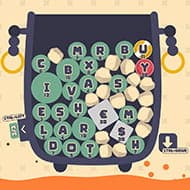
At its core, the game asks you to drag letter tiles together inside the cauldron. Merging two matching letters raises their point value before you ever spell anything, which changes how you read the board. A beginner tends to spell the first real word they see; a player who understands Lexispell waits, merges twice, and cashes out a smaller word for a bigger score instead of dumping letters early.
The ALPHABET bonus rewards this patience directly: each new letter of the alphabet used adds a small multiplier, and clearing all twenty-six in a single run adds a large flat bonus on top. It’s a slow-burn system, and it rarely pays off on your first few runs, since most players burn through common letters long before they think about hunting down a Q or a Z.
Wands and potions sit on top of this economy. A wand might reshuffle a dead cauldron; a potion might buy you one more turn before a boss quota forces your hand. Knowing when to burn one instead of hoarding it is most of what separates an early run from a late one, and it’s a lesson most players only learn after losing a run they should have won.
Classic Craft, Letter Rush, and the Pool
Classic Craft structures Lexispell into twelve levels cleared by hitting a score threshold rather than a clock, which gives newer players room to think through a merge before committing. You win the mode outright by clearing all twelve; the demo version only goes as far as level nine and includes a single boss, which is why players who fall in love with the demo often describe the full release as noticeably longer than they expected.
Letter Rush removes that patience entirely. Letters drop continuously into the cauldron, and the round only ends once the cauldron overflows, so spelling fast becomes the only way to survive rather than a stylistic choice. It’s a high-score chase rather than a story-driven clear, and players who prefer speed over careful merging gravitate toward it almost immediately.
The Pool mode, sometimes called the Jar by players in forums, works differently again: the cauldron fills once with a fixed set of letters, no new drops, and you squeeze out as many words as you can before the letters run dry. It rewards a locked-crossword mindset over a falling-tile one, and it’s the mode most often cited as proof that Lexispell is more than a reskinned merge game.
Boss Encounters and the Rule-Breaking Twist
Boss fights show up roughly every third level in Classic Craft, and they’re where the game earns its reputation. Instead of simply raising the target score, a boss can bend spelling itself — the single-letter-repeat fight is the one players bring up most in comments, because it forces you to abandon vocabulary instinct and think in letter counts instead.
Runes and scrolls change how these fights play out further, since they influence whether rare or special letters spawn during a boss round at all. A run stacked with the right runes can turn a brutal boss into a manageable one, which is part of why experienced players plan their runs around which runes they’ve unlocked rather than treating every level as identical.
Wands, Potions, and Resource Timing
Resource timing is the skill Lexispell quietly tests more than spelling ability. Wands trigger board-altering effects such as reshuffles, while potions grant temporary boosts like extra turns or protection against a bad draw. Both are limited between levels, and saving every wand for an emergency that never comes is one of the most common mistakes reported by players working through Classic Craft.
Letters themselves sit in a backpack before they’re placed, and new players often don’t realize how much backpack space affects late-round decisions until they’re stuck holding a rare letter they can’t fit anywhere useful.
What Beginners Get Wrong Early in a Run
New players tend to treat every level the same way, dumping small words as soon as they appear instead of building toward a bigger merge. By the time a run reaches its first boss, that habit usually costs a level that could have been an easy clear. Vocabulary-focused players tend to overperform early and then hit a wall once the game demands letter-counting over word knowledge, while players coming from other roguelikes often underestimate how much merging math matters compared to spelling skill.
Reviews on Steam sit in the low-90s percent positive range, and most of the criticism that drags the number down isn’t about difficulty — it’s about performance.
How do wands and potions work in Lexispell?
Wands trigger board-altering effects like reshuffles, while potions grant temporary boosts such as extra turns or safety against a bad draw. Both are limited resources you collect between levels, so timing their use against a boss’s twist matters more than saving them for later.
Is the Pool mode different from Letter Rush?
Yes. Letter Rush is about speed against a cauldron that keeps refilling, while the Pool gives you a fixed set of letters and rewards squeezing out maximum value before it empties, closer to solving a puzzle than racing a clock.
Why does the web version lag during long sessions?
Players have flagged performance dips in extended web sessions, along with tile colors that blend together enough that some have asked for higher contrast, and a known crash tied to letters dropping while the shop is open. Neither issue is universal, but both come up often enough in comments to be worth knowing before a marathon run.
By the time you’ve cleared a few Classic Craft levels, Lexispell stops testing your vocabulary and starts testing your resource management — when to merge, when to burn a wand from the backpack, and whether that ALPHABET bonus is worth chasing this run.