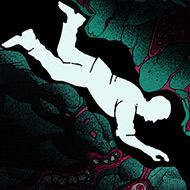
The Cave Diver looks like a spelunking sim but plays like a rage game wearing a folklore ghost story as a costume. You crawl using only two hands, one grip at a time, and the moment you understand that the caves will punish every rushed reach, the whole game clicks into a different shape than its trailers suggest.
| Genre |
Physics-horror puzzle platformer |
| Core Mechanic |
Two-hand grip crawling |
| Estimated Playtime |
3–5 hours |
| Endings |
Descending and Ascension |
Hand-Only Movement as the Central Mechanic
There’s no walking, no jumping, no traditional platforming input. You control two hands independently, gripping ledges, boulders, and rock seams to drag your body forward. It’s the same control philosophy that made Getting Over It infamous, and The Cave Diver leans into that comparison rather than shying from it, right down to how unforgiving a single mistimed release can be.
New players consistently misjudge grip timing in the first ten minutes, releasing one hand before the other has secured a hold, which sends the whole body sliding back toward the old shack where the run began. That early stretch teaches the rhythm the entire game demands, and skipping past it out of impatience just guarantees more falls later on.
The word “game” undersells how physical this feels to play, since success depends on muscle memory as much as reflexes. Players coming in expecting a passive horror walk tend to bounce off hard within the first twenty minutes.
The Old Shack and the First Signboards
Every run starts at the same old shack, crawling right past a lantern and a set of signboards explaining the grip system. This isn’t tutorial fluff you can skip — the signboards cover mechanics you’ll need within minutes, including how to handle a breakable bridge that gives way the first time most players cross it.
Shortly past the bridge sits a boulder that has to be pushed rather than climbed. Players who try to scale it instead of pushing waste several attempts before realizing the game wants a different solution here than everywhere else. It’s a small moment, but it’s the first real sign that The Cave Diver expects you to read each obstacle individually instead of applying one universal technique.
The Caves Region and Its Branching Tunnels
Past the boulder, wooden boards block the path deeper into the tunnels. From here the route splits in a way that shapes the rest of the run:
- Pull the boards away by hand to open a direct path into The Caves region proper.
- Climb over the boards and up the cliff instead, skipping a long crawling stretch entirely.
- Either route eventually funnels into the same narrow squeeze that marks the start of the harder difficulty band.
Once you’re inside The Caves, the difficulty curve steepens fast. Passages narrow, holds get harder to spot against the rock texture, and the branching tunnels stop being decorative — wrong turns here cost real time, not seconds. By the time you reach the deeper forks, most players have already died more times than in the entire opening stretch combined.
Notes From Past Cavers and the Skeleton by the Dried Flower
Scattered through the depths are notes left by cavers who came before you, and eventually you’ll find a skeleton positioned in front of a dried flower. Reading that note is one of the few moments The Cave Diver slows down entirely, letting the folklore premise — a rare flower said to cure any ailment — sink in before throwing you back into the grip system.
Story-focused players tend to read every note in full, piecing together why so many cavers before you never made it back, while speedrunners chasing a clean route skim past them since the notes don’t affect mechanics directly. Either approach is valid, but the notes are doing more narrative work than their brief text suggests on a first read.
The Mines, Soft-Locks, and What Got Patched
Post-launch patches specifically targeted an area near the mines where rocks could trap players in unwinnable positions, along with slippery rock placement that made certain holds unreliable. It’s a fair criticism players still bring up — a rage game living or dying on precise physics can’t afford ambiguous grip surfaces, and early builds had a few that turned deliberate difficulty into accidental unfairness.
By the time you reach the mines section, you’ll have died dozens of times already, and that repetition is either the appeal or the dealbreaker depending on the player. Completionist types tend to push through anyway, treating each death as route data rather than failure.
Descending Versus Ascension: The Two Endings
Deep in the run you’re given a choice to keep crawling down into uncharted depths or work back toward the surface. Choosing to descend closes the game out with the Descending ending. Climbing instead, all the way back to the top of the tunnel system, unlocks the Ascension ending — considerably harder to reach, since it demands retracing brutal grip sequences you’ve already survived once, this time in reverse and under more fatigue.
Players who’ve seen both report Ascension as the tougher physical challenge by a wide margin, and it’s become something of a badge of honor in the community to have pulled it off. Reviews mention it in almost the same breath as the game’s toughest single squeeze near the mines.
Reading Grip Cues Advanced Players Rely On
Past the beginner stage, experienced players stop grabbing the nearest visible hold and start scanning two or three moves ahead, the same way climbers plan a real route before committing to it. Rock texture subtly telegraphs which surfaces will hold a grip reliably, and players who internalize that visual language fall far less often once they’re deep in The Caves.
This is the skill gap that separates a three-hour run from a five-hour one, and it’s largely invisible to anyone just watching gameplay rather than playing it themselves.
- How do you find the Flower in The Cave Diver? The Flower is tied to the game’s folklore ending path, reached only after surviving The Caves and the deeper branching tunnels near the mines, with no shortcuts or map markers pointing the way.
- Is The Cave Diver more puzzle or more platformer? It’s built as a physics puzzle-platformer first, closer in spirit to Getting Over It than to a traditional horror game, even though the folklore framing and atmosphere lean heavily horror.
- What causes soft-locks near the mines in The Cave Diver? Certain rock placements in that area could trap a diver in an unwinnable position before recent patches adjusted rock shape and slippery surfaces in that section.
The Cave Diver earns its reputation the hard way, one failed grip at a time, and by the time you’re choosing between Descending and the long climb back toward the light near the mines, you’ve earned whichever ending you get.