Animal Hospital Anomaly looks like a cozy veterinary game where you bandage paws and check temperatures, but it plays like a cooperative horror shift where the real skill is deciding which patient shouldn’t be let through the door at all.
| Genre |
Cooperative observation horror |
| Platform |
Roblox |
| Core Mechanic |
Inspect incoming animal patients for anomalies before admitting them to the hospital |
| Reported Plays |
Over 1.8 billion sessions logged |
The Night Shift Setup
You’re hired for the night shift, and the premise is deceptively simple: patients arrive, you check them in, and you decide whether they’re safe to treat. Animal Hospital Anomaly builds its entire tension around that single decision repeated over and over, shift after shift, with the stakes climbing quietly in the background.
What makes this loop work is that the game never tells you outright which patients are dangerous. You have to figure it out yourself, using the tools the hospital gives you.
ID Photos, CCTV, and the Inspection Process
The core inspection routine involves comparing a patient’s appearance against their ID photo, then cross-checking that against the CCTV feed before deciding whether to admit them. Community guides consistently stress never skipping one of these checks, even when a patient looks completely ordinary at first glance, since some of the game’s Anomalies are designed specifically to slip past a rushed inspection.
Beginners almost always get this wrong at first, either because they trust their first impression too much or because they don’t realize the CCTV feed can reveal details the photo hides. Once you’ve been burned by an anomaly you should have caught, the habit of checking all three sources sticks fast.
Newer players in particular tend to underestimate how often the photo itself can be misleading, since it’s possible for a patient with an anomalous face to appear perfectly normal in their ID picture.
Hollow Face, Head Banger, and Barney
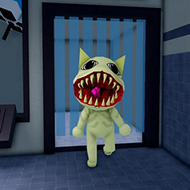
Not every anomaly behaves the same way, and knowing the difference matters. Hollow Face anomalies are largely harmless to the player directly, performing strange rituals on themselves rather than attacking anyone. Head Banger, by contrast, can be calmed down with coffee — a small mechanical detail that surprises a lot of first-time players who assume every anomaly is purely hostile.
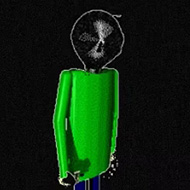
Barney is one of the more notorious recurring anomalies in the community’s vocabulary. He doesn’t attack the player directly, but his backstory as a known serial killer within the game’s fiction makes him one of the more unsettling patients to admit, coffee preference notwithstanding.
Most other anomalies aren’t nearly as forgiving, and treat both the player and other patients as targets once they’re inside the hospital, which is exactly why admitting the wrong one can spiral a shift out of control fast.
Classes, Characters, and the Journal System
As you put in more shifts, Animal Hospital Anomaly opens up additional Classes, each carrying its own bonuses that change how you approach inspections and treatment. Recurring Characters show up across multiple shifts, and the in-game Journal tracks discoveries you’ve made about specific anomalies, functioning as a slowly filling reference guide rather than a simple checklist.
Completionist players tend to treat the Journal as a long-term goal in itself, since fully documenting every anomaly type takes considerably more time than simply surviving individual shifts. Players who prefer fast-paced sessions, meanwhile, often ignore the Journal almost entirely and focus purely on shift-to-shift survival.
Random Events add another layer on top of both approaches, since they can appear regardless of how carefully you’ve been tracking anomalies, keeping even well-documented runs from feeling repetitive.
Ambulance Attacks and Rising Difficulty
Every five shifts, ambulance events bring in patients who are victims of anomaly attacks from the wider world, and these events are the game’s clearest signal that difficulty is scaling upward. It’s a smart pacing choice — rather than simply throwing more anomalies at you randomly, the game ties escalation to a predictable rhythm players can prepare for.
By the time you’ve survived a handful of these ambulance waves, you’ll have accumulated enough Animal Coins to unlock better tools and Classes, which noticeably changes how confident you feel walking into later shifts.
Cooperative players benefit the most from this scaling, since splitting inspection duties across a team catches mistakes a solo player would likely miss.
Where the Community Debates Animal Hospital Anomaly
The core loop is genuinely straightforward once you understand it, and that’s exactly where some of the community’s criticism lands. A number of players find that after several dozen shifts, the moment-to-moment gameplay starts to feel repetitive, since the fundamental decision — admit or reject — doesn’t change even as new anomaly types get introduced.
Solo players in particular sometimes describe later shifts as punishing in a way that feels less like skill and more like bad luck, especially when an anomaly type they haven’t documented in their Journal yet catches them off guard. It’s a fair critique, and one the developers seem aware of given how frequently new Events and Characters get added.
Even with that criticism, the sheer scale of engagement — well over 1.8 billion recorded plays — speaks to how effectively the tension of a single wrong decision keeps players coming back shift after shift.
Trust, in Animal Hospital Anomaly, isn’t a stat you level up. It’s a habit you build by checking the ID photo, the CCTV feed, and your own memory of what a normal patient looks like, every single time, no matter how routine the shift feels.
Whether you’re methodically filling out your Journal entry by entry or just trying to survive to the next ambulance wave, Animal Hospital Anomaly keeps circling back to the same uncomfortable question: are you sure that patient — Barney included — is who they appear to be?