In Who Is? you start with a single static cartoon scene and one blunt question sitting underneath it, and that setup matters because nothing is hidden behind extra screens or menus — whatever you need to answer the question is already sitting somewhere in that one frame, you just haven’t looked closely enough yet.
One Frame, One Question: How Who Is? Sets Up Every Riddle
Every riddle follows the same skeleton: a drawn scene with a handful of characters or objects, and a short prompt asking you to identify something specific about it. There’s no timer counting down and no score attached to how fast you answer — the entire test is whether you noticed the right detail.
That format sounds simple, and for the first several levels it is. A scene shows a handful of characters, and the answer is usually sitting in plain sight for anyone who reads the prompt carefully instead of clicking on the first thing that looks interesting.
The trick, and it’s one players bring up constantly, is that the game rarely asks you to find something obviously wrong. It usually asks you to compare small details across multiple characters, which means skimming the scene gets you nowhere.
Who Is Lying, Who Is an Impostor, and the Other Prompts You Will See
The riddles fall into a handful of recognizable categories once you’ve played enough of them back to back:
- Character-identification prompts, like determining who is lying, who is cheating, who is a spy, or who is an alien hiding among ordinary-looking characters.
- Hidden-object rounds, where the goal is finding a specific item tucked into the background, such as locating a black cat or spotting a hidden bird.
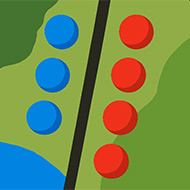
- Categorization riddles, where you separate a group of characters or objects into two distinct categories based on a detail you have to spot yourself.
- Visual and ordering puzzles, including putting a sequence of images in the correct order or matching faces to the correct heads.
The category rotates constantly, which is one of the reasons people keep going well past the first dozen riddles — there’s rarely two levels in a row that test the same instinct the same way.
Tapping, Examining, and Actually Finding the Clue in Who Is?
The interaction model is deliberately minimal. You click or tap on characters and objects in the scene to examine them, and the game expects you to poke at nearly everything before the actual clue reveals itself.
A reasonable approach to most riddles looks like this:
- Read the question carefully before touching anything on the scene.
- Tap through the visible characters or objects one at a time to see what each one reveals.
- Compare the details you’ve uncovered against each other rather than trusting the first thing that looks suspicious.
- Select the answer once one detail clearly contradicts or confirms something the question is asking about.
Skipping step one is the single most common way players waste time. Tapping around blindly on a scene without knowing exactly what you’re looking for turns a thirty-second riddle into a five-minute one.
Hidden-Object Rounds and the Categorization Puzzles Mixed In
Not every level is about identifying a culprit. A meaningful chunk of the riddles function closer to a traditional hidden-object puzzle, asking you to locate one specific item buried in an otherwise busy illustration.
These rounds tend to be the ones players get stuck on longest, since the missing detail is frequently tucked into a background pattern or blended into similarly colored shapes rather than sitting out in the open.
The categorization riddles work differently again — instead of hunting for one hidden thing, you’re sorting a whole group of characters or objects into two buckets based on a rule the game never states outright. Figuring out the dividing line is the actual puzzle, not the sorting itself.
When a Riddle Won’t Budge: Hints and Skipping
Who Is? includes a help option for players stuck on a specific riddle, along with the ability to skip a level entirely rather than getting stuck on one puzzle for the rest of a session.
Both options sit at the bottom of the screen during a level, and using them doesn’t lock you out of anything later — they’re there specifically because some of the visual comparisons are genuinely easy to miss on a first pass, especially on a smaller screen where fine details compress together.
Players who treat the skip button as a last resort rather than a first instinct tend to get more out of the format, since the whole appeal is the moment a hidden detail clicks into place on your own.
How the Puzzles Escalate Past the First Dozen Levels
Who Is? launched in April 2021 with a straightforward set of riddles, and it has kept expanding since, with its most recent content update landing in August 2024. The game now holds well over 100 riddles, and fan-maintained answer guides track solutions into the high 200s, which gives a sense of how much the puzzle pool has grown since launch.
Early levels rarely ask for more than a single observation. Later ones stack multiple details on top of each other — a categorization riddle might require noticing two separate traits at once, or a lying-suspect riddle might hide the contradiction in a detail that only shows up after every character has already been examined once.
Casual players tend to breeze through the first stretch and then hit a wall exactly where the puzzles start combining categories instead of testing one instinct at a time. That jump in complexity is one of the more common things players mention once they’ve gotten a few dozen levels in.
- How many levels does Who Is? have? The game has passed 100 riddles according to its own listing, and community answer guides have documented solutions well beyond level 200 as updates keep adding new scenes.
- What does the hint button do in Who Is?? It nudges a stuck player toward the clue they’re missing, without simply revealing the answer outright.
- Can you skip a level in Who Is? if you’re stuck? Yes, a skip option sits alongside the hint button, letting a player move past a riddle rather than getting stuck on it indefinitely.
Who Is? keeps its formula deliberately simple — one scene, one question, and a clue hiding somewhere between the impostor prompts and the hidden-object rounds — which is exactly why, well over 100 riddles in, it still makes players stop and double-check before tapping their final answer.