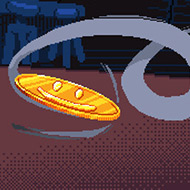
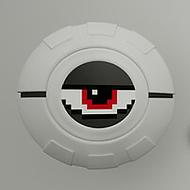
You touch down over a quiet street, humans wandering below with no idea what’s about to happen, and within seconds your beam is pulling the first of them off the pavement. That’s the loop at the center of We Need More Humans!, and it stays satisfying for a lot longer than you’d expect from something this simple.
| Genre |
Incremental / Idler |
| Platform |
Windows, Steam Deck compatible |
| Core Mechanic |
Beam-based abduction with skill tree progression |
| Estimated Playtime |
Roughly 2.5 hours to see everything |
Abducting Humans With the Beam
The beam is your only real tool for most of a run in We Need More Humans!, and it does exactly what it sounds like: point your UFO over a cluster of people and hold it there until they’re lifted aboard. Early on this feels almost too easy, since the first neighborhoods you visit barely put up a fight. That changes once the game starts throwing denser crowds and faster-moving humans at you, and the beam alone stops being enough to clear a zone quickly.
What surprises a lot of new players is how much the beam’s effectiveness depends on upgrades rather than raw skill. You can reposition your ship perfectly and still abduct slower than someone who’s dumped points into beam radius or pull speed. This is where the game quietly becomes less about reflexes and more about planning, which some players love and others find a little disappointing given how action-oriented the opening hour feels.
By the time you’re abducting crowds numbering in the thousands, the beam has usually been reshaped by a dozen or more upgrades, and it barely resembles the weak little tractor beam you started with.
Building the Skill Tree Early in We Need More Humans
The skill tree is where most of your decision-making actually happens, and it’s deep enough that no two players end up with identical builds. You’ll unlock branches tied to beam power, ship speed, capacity, and a handful of passive effects that only become obvious once you’ve stacked several of them together. Beginners tend to spread points too thin here, chasing every new node instead of committing to a path.
A better approach is picking one or two branches to specialize in during your first few regions, then diversifying once you’ve got a stronger income of upgrade currency. Players in the community regularly compare skill tree builds, and there’s a genuine split between those who rush capacity upgrades to abduct in bulk and those who prioritize speed to clear zones faster.
Idle-game veterans will recognize the rhythm immediately, since the skill tree rewards patience over impulsive spending.
Casual players who just want to watch numbers climb can largely ignore optimal routing and still finish comfortably, which is part of why the game has found an audience beyond dedicated incremental fans.
Reading the World Map Before Each Abduction Run
Travel between regions on the world map isn’t just cosmetic. Each new location changes crowd behavior, density, and how humans react once they notice your ship, so treating the map as a simple progress bar is a common early mistake. Some regions cluster people tightly together, rewarding wide-beam builds, while others scatter them, favoring speed and mobility instead.
Once you reach the later regions, humans start actively fleeing the moment your shadow passes over them, which forces a noticeably different playstyle than the relaxed abductions you get used to at the start.
Completionist-minded players tend to backtrack through earlier regions after unlocking stronger beam upgrades, since clearing a zone you once struggled with in seconds is one of the few moments in We Need More Humans! that feels like a direct payoff for grinding the skill tree.
What New Pilots Get Wrong
The single biggest mistake beginners make is treating every run the same way regardless of region. Sticking with a beam-heavy build works fine early, then quietly stops working once movement speed matters more than raw pull strength. Reassessing your skill tree investments after a few regions saves a lot of frustration later on.
The second common mistake is ignoring ship customization entirely. Cosmetic options exist, but a few of the ship variants also nudge beam behavior slightly, and skipping past that menu means missing small advantages that add up over a long session.
Where the Pacing Divides Players
Not everything about We Need More Humans! lands perfectly with every player. The screen tracks movement automatically while you’re mid-abduction, and a number of players have found that tracking distracting or even slightly nauseating during longer sessions, especially when multiple crowds are being pulled in at once. It’s a small design choice, but it’s one of the more frequently discussed criticisms in community spaces.
Some players also find the middle stretch of the campaign repetitive, since the core loop doesn’t introduce dramatically new mechanics after the first couple of regions — just bigger numbers and denser crowds.
How long does it take to finish We Need More Humans!?
Most players report needing around two and a half hours to see the full skill tree and clear every available region, though completionists chasing every upgrade branch will run longer than that.
Does the skill tree reset between runs?
No — skill tree progress carries forward, which is part of why early regions feel dramatically easier once you’ve invested in beam and capacity upgrades from later unlocks.
Is We Need More Humans! difficult for newcomers to idle games?
It’s approachable even for players who’ve never touched an incremental title before, since the beam mechanic is intuitive and the skill tree only becomes intricate if you choose to optimize it.
Watching a once-empty skill tree branch out into a beam that clears entire crowds in seconds is still the best reason to keep playing We Need More Humans!, even after the novelty of abducting your first neighborhood wears off.