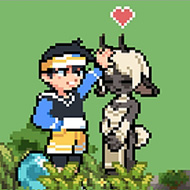
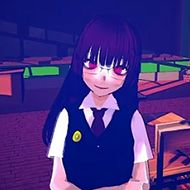
In Chibi Monster Girls you start with an empty garden, one assigned expedition route, and the knowledge that Monster Girls need care to grow — which turns out to matter more than it initially sounds. The stat system is simple to read and quietly demanding to manage when you have several species at different life stages simultaneously. Returning to the game for a second or third session feels different from the first, because the Lamia you hatched yesterday has preferences, a rising Social level, and a growing probability that she will walk over and yell at you if you ignore her too long.
The Garden Economy and Coin Flow
Coins in Chibi Monster Girls come directly from healthy Monster Girls. A Monster Girl who is sick, deeply unhappy, or in a prolonged bad state stops producing coins until her condition improves — meaning the garden economy is immediately tied to the quality of your care. New keepers consistently underestimate how quickly unhappiness compounds: a hunger icon ignored leads to a drop in the happiness meter, which leads to reduced production, which means fewer coins to buy food and keeper upgrades. The game teaches this through mild financial pain rather than a tutorial.
The shop is where coins become tools. The keeper tab lets you purchase two egg inspection upgrades: the first reveals time remaining until hatch, and the second shows what stat levels the incoming hatchling carries. These change how efficiently you build a high-performing garden, letting you select for better stats before committing to raising an egg. Players who skip these upgrades early tend to raise several Tier I variants before realizing they could have been making more informed decisions all along. A focused garden of two or three well-maintained species consistently outperforms an overcrowded one where multiple Monster Girls are simultaneously sick and draining happiness.
Raising Adults and Unlocking the Chibipedia in Chibi Monster Girls
Every Monster Girl passes through egg and child stages before adulthood. Each species has a different hatching time and a different child-to-adult duration, so a garden with multiple species in progress runs several overlapping timers at once. The Lamia and the Frog girl do not share the same schedule, and experienced keepers learn to stagger expeditions so that multiple Monster Girls do not reach the child stage simultaneously and overwhelm the care routine.
Reaching adulthood for the first time with any species unlocks that species’ first Chibipedia entry. Raising five adults of the same species unlocks a second, more detailed entry, along with a record of which color variants you have encountered. Completionists treat the Chibipedia as the actual endgame — it requires sustained expedition runs, enough adults raised to hit the five-raised threshold per species, and a stable enough garden to bring hatchlings through to adulthood without interruption. The post-growth animation added in Update 3 smooths the transition into adulthood, and there is a specific moment — the first time a Lamia completes that animation in a garden you have been carefully managing — that tends to stick with players who put genuine time into the game.
Treat Use, Illness Risk, and Diet in Chibi Monster Girls
Treats are not emergency health items, and treating them as such is the single most common mistake new keepers make. A treat provides a stat boost, but starting from the third treat consumed, the game rolls a chance of illness with each additional one. That chance accumulates over the Monster Girl’s life — a Lamia you have been supplementing with treats generously is progressively more likely to get sick from the next one. The correct approach is to use species-appropriate diet as the primary stat maintenance tool and reserve treats for moments when a stat is genuinely close to the danger threshold.
Once sick, a Monster Girl’s coin production stops and the sick state persists until she recovers naturally. Continuing to feed treats during illness compounds the problem. Diet also varies meaningfully by species — the Frog girl does not eat the same things as the Lamia — and feeding outside a species’ diet does not help recovery. Players who enjoy the optimization side of keeper games tend to build explicit care schedules around the treat counter, treating it as a finite resource to budget rather than a button to press when something looks low.
What Works and What the Game Still Needs
The honest assessment at the current Early Access stage is that Chibi Monster Girls delivers what it promises and little more — which is both its strength and its limitation. The virtual pet loop is clean, the pixel art designs are appealing, and the Chibipedia adds a satisfying secondary objective. But 6 species across 3 routes is a thin roster, and players who have seen all current species and their Tier I variants will find that further engagement depends almost entirely on variant tier hunting rather than discovering new systems. Those comfortable with Early Access as an ongoing process will find value here; those expecting a finished product with a wide species roster on day one will not.
The absence of a death mechanic is a deliberate design choice — Monster Girls will not die, only become unproductive. Some players feel this removes meaningful stakes from the care loop. Others, particularly those who remember the anxiety of Tamagotchi mortality, find it a relief. It is worth knowing before you buy, because it defines whether the moment-to-moment management feels consequential or simply safe.
FAQ: Chibi Monster Girls Player Questions
Can Monster Girls die in Chibi Monster Girls?
No. The worst outcome from neglect is a happiness drop severe enough to halt coin production and leave a Monster Girl in a prolonged bad state. Recovery is always possible through patience and appropriate diet management. This is a deliberate design decision — your Lamia or Frog girl will be unproductive and unhappy if ignored, but the garden is never permanently damaged by a bad stretch of care.
How do I find higher-tier color variants in Chibi Monster Girls?
Higher-tier variants are found by sending expeditions repeatedly to the appropriate route. The egg inspection upgrades in the keeper shop — the first showing hatch time, the second showing pre-hatch stat levels — are essential for evaluating eggs before raising them. Without these upgrades, finding high-tier variants is possible but relies on hatching everything and hoping rather than making informed decisions about which eggs to invest in.
Why does my garden look wrong on Linux?
The Linux build requires a Vulkan-capable GPU. Without Vulkan, the transparent background that allows Monster Girls to appear directly on your desktop does not render correctly. Running the Windows build through Proton causes the same issue because the Windows export uses GL rather than Vulkan. If your hardware does not support Vulkan, the game runs but the desktop pet presentation — Monster Girls appearing to live on your screen rather than inside a bordered window — will not function as intended.
Chibi Monster Girls is at its best when you treat the garden less like a game to beat and more like a responsibility you have chosen to take on. The Lamia does not forget a skipped feeding, the Frog girl’s Social level climbs whether you are paying attention or not, and by the time she yells at your cursor for the first time, you will find yourself checking the Chibipedia entry she just unlocked and planning which expedition route to send out next.