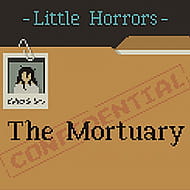
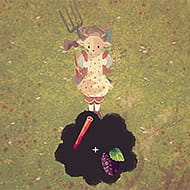
What actually happened in that storeroom before the call woke you up? Little Horrors: The Mortuary never rushes to answer that question, and the slow unraveling of it is most of the reason the game has stuck with players well past its short runtime.
A Midnight Call and the Storeroom
The setup is deliberately minimal. A phone call in the middle of the night tells you your employee is trapped in the storeroom, and from that single moment the game builds outward through pixel-art rooms you explore using point-and-click controls rather than a keyboard. Some players used to WASD movement in modern horror titles find the mouse-only navigation an adjustment, though it fits the throwback style the developers were clearly aiming for.
Interaction is split cleanly between two mouse buttons — one to move and interact, the other to examine objects and advance dialogue — and that simplicity keeps the pacing tight instead of bogging you down with inventory menus or item combinations the way a lot of adventure games do.
Sessions typically run only a few minutes long, which is short even by the standards of narrative horror games, but the atmosphere is dense enough that most players describe it as feeling longer than it actually is. Nothing about the pacing feels rushed, which is a deliberate choice given how much the game depends on a slow build rather than constant incident.
Because there’s no combat and no fail states to worry about, the tension comes entirely from atmosphere and implication rather than danger, which sets Little Horrors: The Mortuary apart from horror games built around chase sequences or resource management.
Reading the Mortuary’s Details
Little Horrors: The Mortuary leans heavily on environmental storytelling rather than jump scares, and the mortuary setting itself does a lot of quiet work. Examining objects around the building triggers character commentary that several players have singled out as unexpectedly detailed for such a short game, giving small hints toward what’s really happening before the story fully reveals it.
The moment the body you’ve been investigating begins moving on its own is the scene most player reactions circle back to, and it’s the clearest example of the game trusting a single well-placed beat over repeated scares. It lands hard specifically because so little else in the storeroom has moved up to that point.
Because the mystery is told almost entirely through examining objects and short dialogue exchanges, missing an interaction early on can leave later scenes feeling less coherent, which is worth keeping in mind if the ending feels abrupt on a first playthrough.
Sound design plays a bigger role here than the pixel-art visuals might suggest. Several players have noted that the ambient audio in the storeroom does more to build dread than anything shown on screen, which is a deliberate trade-off given how simplified the character sprites and backgrounds are throughout.
Why the Ending Divides Players
The most common piece of feedback around Little Horrors: The Mortuary isn’t about difficulty — it’s about length. A large number of players finish satisfied with the story but explicitly wanting more, since the game closes right as its central mystery starts opening up further questions. Whether that counts as a strength or a shortcoming tends to depend on how much a given player values a tight, self-contained horror scene versus a fully resolved narrative arc.
The developers have confirmed the mortuary story is meant to be the opening chapter of a series, with two more full adventures planned before a final entry closes things out. That framing changes how the ending reads: less like an unfinished game, more like a deliberate cliffhanger meant to carry momentum into whatever comes next.
Even players who wanted a longer first outing tend to agree the abrupt cut works in the story’s favor, since it mirrors the disorientation the storeroom sequence is built around rather than undercutting it.
What Long-Time Point-and-Click Fans Notice
Players who grew up on classic point-and-click horror recognize the influences almost immediately — deliberate movement, examine-heavy investigation, and dialogue that rewards clicking on nearly everything in a room. Newcomers to the genre sometimes find that pace slower than they expect from a horror game, especially in the opening minutes before anything unsettling happens.
What happens if you skip examining objects in the storeroom before heading further into the mortuary? The story still progresses, but several of the smaller narrative details that make the ending land are easy to miss entirely, since Little Horrors: The Mortuary rarely repeats information once it’s been offered.
Speedrunning-minded players have already started comparing how quickly the storeroom sequence can be cleared, though most agree that rushing through undercuts the atmosphere the game is built around far more than it does in longer horror titles where backtracking is expected.
What Comes Next for the Series
With the first chapter holding an average rating above 4.5 out of 5 from its early audience, expectations for the next installment are already forming in community spaces. Requests for additional language support have been a recurring theme in player feedback, alongside hope that future entries expand beyond a single location the way the mortuary confined this opening story.
Whether the next chapter follows the same employee or introduces an entirely new setting remains unconfirmed, but the tone established in the storeroom — quiet, observational, and light on outright scares — seems likely to carry through the rest of the series.
Long after the credits roll on Little Horrors: The Mortuary, it’s the image of that body stirring in the storeroom that tends to stay with players, a small enough detail to describe in one sentence but effective enough to justify wanting a second chapter.