Crowning in Master Checkers does not happen the moment a piece looks like it’s about to reach the back row — it only happens once that piece actually lands there, and the gap between almost and actually has cost plenty of players a match they thought was already won.
What Crowning Really Changes for a Piece in Master Checkers
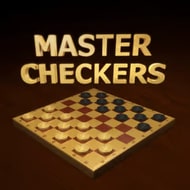
Master Checkers follows the traditional draft setup: a standard eight-by-eight checkered board, twelve pieces per side, all starting on the dark squares in the three rows closest to their own edge. A regular piece — a “man,” in checkers terms — can only move and capture diagonally forward.
Once that piece reaches the farthest row on the opponent’s side, it’s crowned. From that point it plays as a king, able to move diagonally both forward and backward, which turns it from a one-directional threat into something that can defend and attack from either side of the board at once.
This is the single upgrade the entire game revolves around. Losing a piece a few moves before it would have crowned stings more than losing one early, because the potential a king represents disappears with it.
Players who rush a single piece up the board without support tend to learn this the hard way — an unescorted piece marching toward the crown is an easy target, and the opponent doesn’t need to stop it outright, just clear the path behind it so the resulting king has nowhere safe to stand.
The Jump You’re Not Allowed to Skip
True to the traditional rules it advertises, Master Checkers treats a capture as mandatory once one becomes available. If a jump is sitting on the board, you have to take it — you can’t simply move a different piece and leave the capture for later.
The sequence behind a legal jump follows the same logic in every match:
- An opponent’s piece sits diagonally adjacent to one of yours.
- The square directly beyond that piece, on the same diagonal, is empty.
- Your piece jumps over the opponent’s piece and lands on that empty square, removing the captured piece from the board.
- If the same piece has another legal jump available from its new position, the capture continues in the same turn rather than passing to the opponent.
That last step is where games get decided. A single careless move can open a lane for a multi-jump that clears three or four pieces in one turn, and it’s one of the more brutal swings the game produces — a position that looks fine until it very suddenly isn’t.
Whether mandatory capture should even be a rule players can turn off is one of the oldest arguments in checkers circles, and Master Checkers doesn’t give an option — you either play the traditional way or you don’t play at all.
Easy, Medium, Hard: How Master Checkers’ AI Tiers Diverge
Master Checkers offers three AI difficulty levels — easy, medium, and hard — layered on top of the same board and rules. On easy, the computer frequently takes the first available capture instead of the stronger positional option, which makes it a reasonable place to practice recognizing forced-jump sequences without immediate punishment.
Medium starts contesting the center rows and stops handing away pieces for no reason. Hard is where the AI starts setting up shots deliberately — sacrificing a piece so a mandatory capture drags yours out of position, then cashing in with a bigger jump a move later, sometimes coming out two or three pieces ahead once the dust settles.
Jumping straight to hard without understanding why forced captures shape the whole board usually ends the same way: a player trades down into a position where the computer has more kings and better board control, without ever seeing the setup coming.
Reading the Double Corner and Other Endgame Patterns
The double corner — the corner of the board where two friendly pieces can sit side by side on the back two rows — comes up constantly in checkers strategy discussion, and it applies just as directly here. A king tucked into the double corner is exceptionally hard to dig out, since there’s rarely a clean line of attack into it.
Players who ignore their own back row while pushing pieces forward tend to regret it late. Advancing front pieces as fast as possible to grab a king sounds efficient, but it leaves gaps in your own defensive structure that a patient opponent can walk a piece straight through.
The endgame in Master Checkers, like in any serious game of draughts, usually comes down to tempo — who can force the other side into a bad trade first. With fewer pieces left on the board, every jump carries more weight than it did during the opening exchanges, and a single miscounted diagonal can hand over the whole game.
Local Matches Against a Friend, and Where Opinions Split
Beyond the AI, Master Checkers includes a mode for two people to play against each other by sharing the same board and taking turns, which strips away the difficulty tuning entirely and leaves the ruleset itself to decide the outcome.
Reception for the game is genuinely split depending on where you look — one listing shows a strong 4.2 out of 5 across roughly 284,000 votes, while a separate, much smaller listing rates it closer to 2.8. That’s a wide enough gap to notice, and some of it likely comes down to how forgiving or punishing players find the higher AI settings once forced jumps start compounding against them.
What doesn’t change across any of that is the core loop. Plan a move, respect the jump rule whether you like it or not, and try to get a piece to the far row before your opponent does the same to you.
Openings That Set Up the Whole Board
Because captures are mandatory, the opening moves in Master Checkers matter more than they might in a game where players can simply decline a trade. Advancing a piece into a square where it can be jumped from two directions at once is a common early mistake, since a single careless push can hand over a piece for nothing before the middle of the board is even contested.
Building a solid front row before pushing individual pieces forward is the standard advice, since a line with no gaps is much harder for an opponent to jump through cleanly. Players who rush one piece up the board in the opening, hoping to crown quickly, tend to lose that piece to a multi-jump before it gets anywhere close to the far row.
Master Checkers stays loyal to the traditional draft experience it promises — the double corner still protects a king, a jump you could take is still a jump you have to take, and crowning still changes everything about how a piece behaves for the rest of the match.