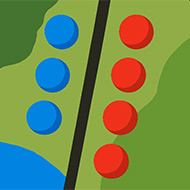
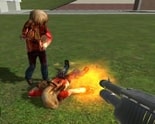
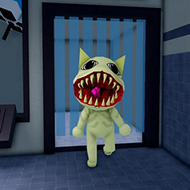
Meteor 60 Seconds throws you through nine wildly different worlds and fifty-two microgames that each last only a few seconds, and the whole thing somehow holds together as one coherent, ridiculous whole. One moment you’re brushing the teeth of a killer whale by scrubbing the screen, the next you’re shepherding swimmers between a pair of flags before the timer runs out — there’s no warning, no pattern, just whatever absurd task the game throws at you next.
Hapless, Stupe, and the Rest of the Meteor 60 Seconds Cast
Your roster starts with Hapless, the first character unlocked and the closest thing the game has to a mascot, and it grows steadily as you clear worlds and rack up successful microgames. Stupe sits at the opposite end of the roster as the last unlock, which gives the whole collection process a clear finish line even when the microgames themselves feel completely random in the moment.
Unlocking characters isn’t just cosmetic bragging rights — new faces show up as background participants in later microgames, so the roster you’ve built slowly becomes part of the world itself rather than sitting separately in a menu.
Nine Worlds, Nine Completely Different Tones
Dumb Dome opens the game with a tutorial-adjacent tone before handing you off to Drown Town and Freezerville, each built around water and ice hazards respectively. From there, The Dumbest of the Dumb, Adrenaland, Camp Catastrophe, and The Dumbgeon each lean into their own theme hard enough that switching between them mid-session feels like changing games entirely, not just changing levels.
Summer Stadidumb and Area Fiftydumb close out the roster with a sports-parody stretch and an alien-conspiracy stretch that neither explains itself nor needs to. What ties all nine worlds together isn’t tone — it’s the shared microgame format, fast enough that no single world overstays its welcome even at its weirdest.
Reading a Microgame in Under Two Seconds
Fifty-two distinct microgames means the game rarely repeats an instruction, and that’s the real skill test in Meteor 60 Seconds: reading an unfamiliar prompt and reacting correctly before the short timer runs out. Electric Fence Hurdles wants precise jump timing. Dynamite Relay Race wants you passing a lit fuse to the next character without dropping the handoff. Dolphin Rodeo just wants you clinging on as long as physically possible.
Beginners consistently freeze for a half-second trying to parse an unfamiliar icon or instruction, and that hesitation alone is often the difference between clearing a microgame and failing it outright. There’s no partial credit for understanding a microgame too late.
What Makes the Later Worlds of Meteor 60 Seconds Harder
Early worlds space microgames out with a little breathing room between rounds. By the time you’re deep into The Dumbgeon or Area Fiftydumb, that breathing room shrinks, and microgames start chaining together with barely a beat to reset your focus. It’s less about any single microgame getting harder and more about the accumulated pressure of not getting a real break.
Players who’ve cleared every world tend to describe the late stretch less as difficulty and more as endurance — your reaction time doesn’t need to improve so much as your ability to stay locked in without a mental reset between rounds.
Don’t Block The Doorway and Other Community Favorites
Certain microgames get singled out constantly in player discussion, and Don’t Block The Doorway is one of the most divisive — a simple concept that turns chaotic fast once multiple characters are trying to squeeze through at once. It’s the kind of microgame that’s either over in a clean second or turns into a genuine scramble, and there’s not much middle ground between the two outcomes.
That unpredictability is part of what keeps players coming back — the same microgame can feel trivial on one attempt and nearly impossible on the next, purely based on how the characters happen to position themselves.
What’s the actual objective across Meteor 60 Seconds’ microgames? There isn’t one unifying goal beyond survival — each of the fifty-two microgames has its own tiny win condition, and success is measured by how many you clear rather than any single overarching task. Does character choice affect gameplay? Not directly during microgames themselves, but unlocking more of the roster does change who shows up as background participants in later rounds, giving the collection loop a real payoff beyond a completed gallery screen.
Meteor 60 Seconds succeeds by never letting any single moment matter too much on its own — it’s the accumulation of fifty-two tiny tests across nine mismatched worlds that makes the whole thing memorable. By the time Stupe finally joins your roster, you’ve stopped counting how many microgames you’ve actually survived and started just reacting on instinct, which is exactly the state this game is built to put you in.