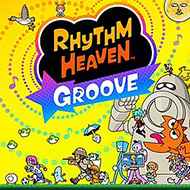
In Rhythm Heaven Groove you start with nothing but a beat and Lil’ Miss Reeds narrating your first steps, and that opening quiet matters more than it looks. The game gives you almost no visual tutorial, trusting your ears over your eyes from the very first minigame, and that single design choice trips up a surprising number of new players before they ever reach the second set.
| Genre |
Rhythm / Minigame Collection |
| Platform |
Nintendo Switch |
| Release Year |
2026 |
| Minigames |
Over 80 |
| Core Mechanic |
Match input timing to audio and visual cues |
Reading Cues Before Rhythm Heaven Groove Shows Its Hand
Every minigame teaches its rhythm through sound first, which means the visual prompts you see on screen are often a half-step behind what your ears already know. Beginners tend to watch the screen too closely and end up chasing animations instead of listening, and that habit is exactly what causes most early drops in games like Hoop Trundling, where the toss-and-catch timing only makes sense once you stop staring at the hoop itself. Once players let go of that instinct, the difficulty curve starts to feel fair instead of punishing.
The game also layers in visual misdirection on purpose. A minigame will sometimes show you something that looks like a cue but isn’t, forcing you to fall back on the beat underneath. It’s a small trick, but it’s one of the reasons Rhythm Heaven Groove rewards repetition over reflexes.
Community players call this “listening past the screen,” and it’s the single most repeated tip across guides for anyone stuck below OK-rank scores.
Fruit Flex and the Line Between A-Tier and S-Tier
- Fruit Flex demands frame-perfect input windows that most other minigames don’t ask for
- Hoop Trundling sits comfortably in A-Tier thanks to forgiving timing and clear audio spacing
- Shield Beat, an A-Tier defense-focused game, punishes hesitation more than mistiming
Fruit Flex sits alone as the game’s only S-Tier minigame, and once you’ve played it you understand why. Its scoring ceiling is unusually tight, and it functions as the gatekeeper for anyone chasing a Perfect Campaign, the community term for clearing every stage without a single miss. Hoop Trundling and Shield Beat are both considered A-Tier, difficult but learnable within a handful of attempts, while Brolly Good Show and Hop Stop N Roll are generally ranked B-Tier for players farming medals rather than chasing perfection.
Feeding the Beast, meanwhile, is flagged as one of the harder Hard-difficulty minigames in the whole lineup, since its timing window barely gives you room to correct a late input.
Beatspell Turns Rhythm Heaven Groove Into an RPG
Beatspell is the new campaign mode built around casting spells to the beat of the music, and it changes the pacing of the whole package considerably. Instead of jumping between unrelated minigames, you’re managing party composition and elemental matchups while still needing to nail the same audio timing the core game is built on. Shield Beat reappears here as a defensive spell, absorbing incoming damage only if you land the beat correctly, which turns a familiar minigame into something with real stakes.
Story-focused players tend to gravitate toward Beatspell specifically because it gives context to mechanics that otherwise exist in isolation. Score-chasers, on the other hand, mostly treat it as a detour before returning to the main minigame set.
Flow state bonuses stack with combo streaks the longer you stay accurate, pushing your rating from OK toward Superb and eventually Superb+ if you can sustain it.
Multiplayer Sets and the Café Trophy Wall
Up to four players can jump into any of the 30 local multiplayer minigames, and unlike the solo campaign, these lean much harder into chaos than precision. Reaching certain milestones unlocks trophies displayed back in the Café and the Lounge, including separate rewards for earning Night Mode Perfects, a harder variant unlocked after finishing the base minigame set.
Groups who play together tend to favor the multiplayer minigames almost exclusively, since the shared screen turns mistakes into running jokes rather than failures.
Remix 8 stands out as the closest thing to a final boss before the credits, opening and closing on Fruit Flex the same way earlier games in the series bookend their own finales.
Why does Fruit Flex rank above every other minigame in Rhythm Heaven Groove?
Fruit Flex asks for frame-accurate inputs with almost no margin for error, which is a tighter standard than anything else in the lineup. Its scoring ceiling is what locks it into S-Tier and makes it the unofficial test for Perfect Campaign attempts.
How do you unlock the Beatspell RPG mode?
Beatspell opens up as a separate campaign once you’ve made enough progress through the main minigame sets, layering party-based spellcasting on top of the game’s usual rhythm timing.
How many players can join Rhythm Heaven Groove’s multiplayer minigames?
Up to four players can play locally across 30 dedicated multiplayer minigames, separate from the single-player campaign and its Night Mode variants.
Some players still wish Lil’ Miss Reeds’ narration could be trimmed rather than only muted outright, since her commentary is charming for the first few hours but starts to repeat itself by the time you’re farming medals on Fruit Flex. Even with that one gripe, Rhythm Heaven Groove holds together as a rhythm game that respects your ears more than your reflexes, and it’s rare to find a Switch release this confident about making you listen first.