Right Click to Necromance looks like a joke of a title, the kind of name that promises a five-minute novelty and nothing else, but it plays like a real incremental grind once the bones start piling up. You right-click a graveyard, bones appear, and within a few minutes those bones are buying you an undead army instead of just sitting in a counter.
Bones as Currency in Right Click to Necromance
Every action in Right Click to Necromance funnels back into a single resource: bones. Early on, right-clicking the grave is the only bone source you have, and it works fine because the costs are small. That balance flips fast — the moment you’re saving up for a wizard-tier summon, manual clicking turns into the slowest possible way to get there.
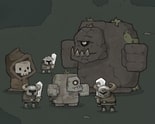
The game nudges you toward automation without ever explaining it outright. Skeleton and warrior units don’t just pad your army for looks; they generate bones passively, and ignoring that in favor of pure clicking is the single biggest mistake new players make.
- Skeletons: cheap, fast to produce, weak individual bone output.
- Warriors: mid-tier cost, stronger passive generation than skeletons.
- Wizards: the expensive tier, worth saving toward once passive income is stable.
Building the Undead Army in Right Click to Necromance
The temptation in any clicker is to buy whatever’s cheapest the second you can afford it, and Right Click to Necromance punishes that instinct almost immediately. Spending every bone on skeletons feels productive in the first few minutes and then stalls out hard once warrior and wizard costs scale past what skeleton output alone can cover.
What experienced players actually do is hold back a cushion of bones rather than spending down to zero every time, since a graveyard that’s mid-upgrade produces nothing for a stretch — and that dead window is where early runs lose the most time. Community chatter around clicker games like this one tends to call that stretch the “dry patch,” and Right Click to Necromance has one no matter how efficiently you play.
There’s no penalty for taking it slow here, which is honestly one of the more divisive things about the game — some players want a harder curve where mistakes actually cost you, and instead the worst outcome is just a slower graveyard.
Right Click to Necromance never pretends to be more than a bones-in, army-out loop, and that honesty is exactly why it works as a short session game. Once your skeletons and warriors are quietly filling the bone counter on their own, the right-click itself becomes almost optional — which is a strange, satisfying place for a game with this title to end up.