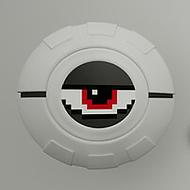
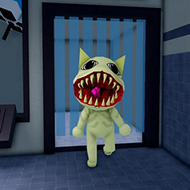
SuperSorry sounds like it should be a slow, apologetic little game about making amends, but what actually loads is a fast, physics-driven kicking game where momentum and timing matter far more than any story beat. There’s no dialogue explaining why anyone owes anyone an apology — just a launch mechanic, a target, and the satisfaction of landing a clean hit.
The Kick Mechanic at the Center of SuperSorry
Every level in SuperSorry comes down to the same basic loop: line up a kick, commit to it, and watch the physics decide whether you actually hit what you were aiming for. The window for a clean connection is narrower than it looks in the first few attempts, and overcommitting to a kick tends to send momentum somewhere you didn’t intend.
What separates a good run from a wasted one is patience before the kick itself. Rushing the setup is the single most common mistake — the angle and force behind a kick matter more than reaction speed, since SuperSorry isn’t built around split-second reflexes so much as careful positioning.
Follow-through: the arc of a kick continues to affect the target even after contact, so a good hit isn’t just about landing it, it’s about where the momentum carries afterward.
Reading the Physics Before Committing
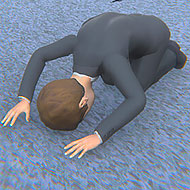
SuperSorry leans hard on ragdoll-style physics, which means outcomes aren’t always perfectly repeatable even with the same input twice. That inconsistency is one of the more debated aspects of the game — some players enjoy the chaos as part of the challenge, while others find it frustrating when a kick that worked once fails on an identical attempt.
Early levels are forgiving enough to hide this variance, but by the time layouts get tighter and targets get further away, small physics differences start deciding whether a run succeeds or falls apart entirely.
What New Players Consistently Underestimate
The instinct to kick as hard as possible is almost always wrong in SuperSorry. Overpowered kicks send targets flying past where you actually needed them to land, and it usually takes a handful of overshoot failures before players start dialing back force in favor of precision.
Once you’re playing for accuracy instead of raw power, later levels start to feel less like a lottery and more like a puzzle — reading the angle, judging the distance, and trusting a controlled kick over a maximum-force one.
What’s the objective in SuperSorry?
Landing precise kicks to send a target to a specific spot or through a specific obstacle, with the physics engine determining how the follow-through plays out.
Does the same kick always produce the same result?
Not exactly — the physics-based system means small variations can produce slightly different outcomes even from a similar setup, which is part of what makes later levels unpredictable.
Is precision or power more important in SuperSorry?
Precision. Overpowered kicks tend to overshoot targets, and controlled, well-aimed kicks are consistently more reliable than maximum-force attempts.
SuperSorry never bothers explaining its own title, and honestly, it doesn’t need to — the appeal is entirely in the kick-and-watch loop, one careful hit at a time. Once you’ve traded raw force for real precision, the game stops feeling like a lottery and starts feeling like something you can actually get good at.