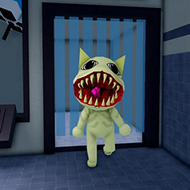
You knock on the door of a house in Happyhills because a client swears something is scratching behind the drywall, and within two minutes of stepping inside you already know the flashlight in your bag is not going to cut it. The Happyhills Homicide drops you into the shoes of a struggling ghost-removal worker taking odd jobs from people who think their houses are haunted, and the case that looked routine on the phone turns into something nobody warned you about. That gap between what the client tells you and what you actually find behind the walls is where this game spends almost all of its runtime.
| Genre |
Point-and-click horror comedy |
| Perspective |
Side-on cross-section rooms |
| Core Mechanic |
Item collection and environmental puzzles |
| Setting |
A single house across multiple floors |
| Typical Session |
Roughly 20 to 40 minutes for a full run |
The Case That Opens The Happyhills Homicide
Every job starts the same dull way: a customer wants noises gone, and you show up with a case of gear built for a business that mostly deals in raccoons and bad plumbing pretending to be ghosts. The Happyhills Homicide leans hard into that mismatch between how confident you sound on the doorstep and how little you actually know once you’re inside.
Dialogue does a lot of the early lifting. Conversations with the client are short, dry, and packed with details that only matter later, so players who click through text without reading tend to miss the small warnings the writing drops early on.
Reading a House You Can’t See All at Once
Movement is handled through a side-on cross-section view, meaning you’re looking at the house like a dollhouse with the front wall removed. A line drops from your cursor to show which floor or ledge your character will actually land on, and misjudging that line is the single most common early stumble.
Rooms stack awkwardly on top of each other, and the game rarely tells you outright that an item on one floor unlocks something two rooms away. Players who treat each room as a sealed puzzle instead of one connected structure waste a lot of time backtracking.
Once you get a feel for the vertical logic, movement stops being annoying and starts being informative, since the layout itself hints at where the next clue is hiding.
What Ends Up in Your Equipment Bag
Inventory management stays light compared to most point-and-click games, but the tools you pick up define how each room gets solved. Over one run you’ll typically end up carrying:
- A flashlight for rooms too dark to inspect properly
- A proton pack style device used once the haunting stops being subtle
- Assorted household items repurposed for puzzles they were never meant for
- Notes and scraps that only make sense once you reach the scripture room
None of these items are flashy on their own, but the game is stingy about explaining what they do, so a lot of the middle section is trial and error against the environment.
Rocky and the Job That Turns Personal
The client’s dog, Rocky, is introduced early as comic relief, a pug who wanders through rooms while you work. Players who’ve finished The Happyhills Homicide tend to bring up Rocky first when they talk about it, because what happens to him is the moment the tone flips from goofy to genuinely upsetting.
By the time Rocky becomes central to the plot, the joke framing of the job has already worn thin, and the story stops pretending this is a normal pest-control call.
The Room Most Players Get Stuck In
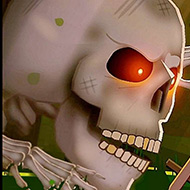
The scripture room is the point where a lot of first-time players stall out completely. The solution hinges on a light switch that isn’t highlighted or hinted at with any obvious cue, so people either find it by clicking everything in sight or give up and look for help. Right after that comes an encounter with a creature the community just calls the beast, where the fix is to right-click and throw an item down instead of walking toward it, which isn’t how the rest of the game has trained you to interact.
These two spots account for most of the frustration players report, and they’re also where the pacing deliberately slows down before everything accelerates toward the ending.
The Turn That Redefines The Happyhills Homicide
Without spelling out every beat, the back half stops being about noisy houses and starts being about what the ghost-removal business has actually been covering up. The Happyhills Homicide uses its cheerful, slightly cheap-looking presentation as misdirection, so the shift in tone lands harder than it would in a game that looked scary from the start.
Once the truth about the case is out, earlier throwaway lines from the client and from your own boss suddenly read as warnings, which is exactly the kind of detail players mention when they replay it a second time.
Working Through the Ending Once the Truth Is Out
After the reveal, the final stretch tightens into a more linear sequence. Most players end up following roughly the same order of actions:
- Retrieve the proton pack style device from where it was left earlier
- Return to Rocky’s location with the item needed to confront what he’s become
- Use the right-click throw mechanic instead of direct contact
- Push through to the final room where the case gets closed for good
The pacing here is deliberately faster than the rest of the game, which catches slower players off guard after nearly an hour of careful, unhurried exploring.
What Players Still Argue About
The main criticism that comes up in comment threads is length: The Happyhills Homicide is short enough that some players feel the ending arrives before the mystery has been fully earned. Others argue that’s exactly the point, since the abruptness mirrors how the client’s own understanding of the situation collapses. Both readings show up constantly in discussion, and neither side has really won the argument.
Questions About The Happyhills Homicide
What happens if you miss the light switch in the scripture room?
Nothing progresses. The room is designed to stall until the switch is found, so players who assume they’re missing an item usually just need to keep clicking the walls and fixtures rather than searching their inventory.
Why does the fight with the beast keep failing?
Most failed attempts come from walking toward it the way you’d approach any other obstacle. The room expects a right-click throw instead, which breaks the movement habit the rest of the house has built up in you.
Does Rocky’s fate change depending on player choices?
No. The outcome involving Rocky is fixed and drives the story regardless of how carefully or carelessly earlier rooms were explored, which is part of why it lands the way it does.
The Happyhills Homicide works because it never asks you to trust the client, the house, or even Rocky at face value, and the moment that trust breaks is the moment the whole case stops being a joke about bad plumbing.