You move with your family into a small village swallowed by Siberian forest, expecting a quiet transfer between schools, and within your first week a boy from your class goes missing. That disappearance is the hook Tiny Bunny opens with. You play as Anton, a sixth-grader pulled into the search partly out of guilt and partly because his friend Olya wants the reward money for a trip to Disneyland, and from there the plot splits into paths you choose rather than watch.
| Genre |
Horror Visual Novel |
| Format |
Episodic, choice-driven story |
| Setting |
Rural village in the Siberian forest |
| Structure |
Non-linear, branching routes |
Anton’s Village and the Missing Children in Tiny Bunny
The village Anton moves into looks ordinary at first, the kind of place where everyone knows everyone. That impression breaks fast.
Kids start disappearing one after another, the police investigation stalls, and Anton decides to look into it himself. The reward money matters to him, but so does the guilt of doing nothing.
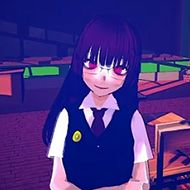
Polina, a girl at his new school, tries to become his first real friend in town and represents the grounded, human pull in Anton’s life, set against Alisa almost from the start. Tiny Bunny keeps its early pacing slow, spending real time on school days and small-town unease before anything openly supernatural shows up.
Alisa, Teddy, Hooty, and Wolfy
The four masked children Anton meets in the woods give the game its identity: Alisa the fox, Teddy the bear, Hooty the owl, and Wolfy the wolf. Each wears a different animal mask and a noticeably different personality underneath it.
Alisa becomes central fast, offering Anton candy and an escape from his parents’ rules that Polina never quite matches. Whether you accept or refuse the Turbo candy Alisa offers is an early branch point players discuss, since it shifts how the masked children treat Anton later on.
Teddy, Hooty, and Wolfy get less individual screen time, but their presence as a group, always masked, always slightly off, gives the early episodes their folk-horror texture instead of jump scares.
Choices That Rewrite Anton’s Path
Tiny Bunny is built around decisions that don’t announce their weight when you make them, and standing up to Semyon, a bully who pushes Anton around at school, is a moment players bring up often.
- Accepting or refusing candy from Alisa in the forest
- How Anton responds to Semyon at school
- Choosing to pursue Polina or Alisa once both routes open up
- Smaller dialogue choices made during the search for the missing children
Getting through the Semyon scene properly is what opens later options with both Polina and Alisa rather than closing them off, and none of these choices come with a warning label.
That’s part of why players end up replaying earlier episodes, comparing notes on which route they ended up locked into.
What Tiny Bunny Doesn’t Explain Right Away
Episode four is where Tiny Bunny changes shape. The masked children Anton has been dealing with for three episodes turn out to be something closer to giant cannibalistic monsters wearing a friendly disguise.
The folk-horror tone the game spent so long building gets pulled apart, and it’s a genuinely divisive turn. Some players think the reveal earns its payoff by recontextualizing everything Alisa and the others did earlier; others feel it trades the slower dread of the first episodes for a more straightforward monster story.
What’s harder to dispute is how differently the earlier chapters read on a second run, once a throwaway line from Wolfy or Teddy lands completely differently.
Do choices in Tiny Bunny carry across all five episodes?
Yes. Decisions made in episode one, including how Anton treats Alisa and whether he stands up to Semyon, affect which routes and endings open up by episode five.
What happens if you refuse Alisa’s candy?
Refusing the Turbo candy keeps more distance between Anton and the masked children early on, changing how much Alisa trusts him later.
Can you save the missing children in Tiny Bunny?
It depends heavily on the route. Not every path lets Anton succeed, and different endings treat the missing kids differently, which is why players compare notes on which route they landed on.
Tiny Bunny rewards the kind of player willing to replay a chapter just to see Wolfy react differently to a single choice, and that’s really the point of a story told through five branching episodes instead of one straight line. It asks you to sit with an ordinary village before showing you what’s underneath it, and by the time Alisa’s mask comes off for good, how you feel about it depends entirely on which path you walked to get there.