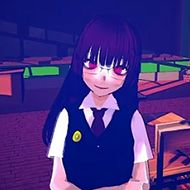
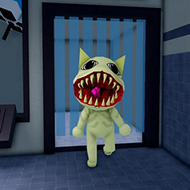
You land at the airport with nothing decided yet — not which of the thirty-four avatars you’ll play as, not which of the four locations you’ll wander into first, not even whether you’re here to relax or cause a little chaos at the check-in desk. Tomodachi Life hands you a whole vacation with no rules attached, and the entire point is figuring out what you actually want to do with that freedom.
Four Locations, All Connected in Tomodachi Life
The airport, the beach, the hotel, and the boardwalk aren’t separate menus you select between — they’re stitched together into one continuous vacation space in Tomodachi Life, and moving from one to the next feels like actually traveling rather than loading a new level. That connectivity matters more than it sounds like it should, since objects and avatars can move between locations rather than staying locked to wherever they started.
Each location has its own internal logic too. The airport isn’t just a starting screen; it’s got an X-ray machine, boarding gates, and a cockpit you can actually sit in. The hotel spans multiple floors, complete with an all-you-can-eat buffet and an elevator connecting a set of suites that all look and feel distinct from one another.
Thirty-Four Avatars and No Fixed Story
Every avatar in Tomodachi Life is built for combination rather than selection — mixing and matching styles across the roster means the “story” of your vacation is really just whichever avatars you decided to bring along and whatever situations you put them in. There’s no assigned protagonist and no required sequence of events.
What beginners consistently miss early on is how much these avatars can actually do. It’s tempting to treat them like static dolls being moved around a set, but Tomodachi Life is built around every single object being pickable, movable, and combinable — the avatars are just as manipulable as the furniture and props around them.
- Thirty-four base avatars: each with distinct styles ready to be mixed and matched.
- Fully interactive objects: nearly everything on screen can be picked up or repositioned.
- No fixed roles: any avatar can be placed in any location or situation.
What the Beach Actually Lets You Do
Sandcastles, towels, umbrellas, and a wash-off station make up the beach’s toolkit in Tomodachi Life, and none of it is purely decorative — every piece can be rearranged, which means the beach you leave behind rarely looks like the beach you started with. Building and demolishing a sandcastle costs nothing here; there’s no progress bar tracking whether you did it “correctly.”
Beneath the surface, quite literally, the beach hides more than sand. Investigating the seafloor turns up buried treasures and secret compartments, along with a mysterious statue that doesn’t explain itself — Tomodachi Life leaves that discovery entirely up to curiosity rather than a quest marker telling you where to look.
The Hotel’s Floors and Why the Buffet Matters
Multiple floors, a working elevator, and a buffet with genuinely different food options give the hotel section of Tomodachi Life more depth than a single static room would. Each suite the elevator connects to plays a little differently — some set up for quiet relaxation scenes, others clearly built for more chaotic multi-avatar setups.
The buffet in particular tends to be where players spend more time than expected, since it’s one of the few spots in the game built around a specific ongoing activity — grabbing and combining food items — rather than pure open-ended movement.
Shopping, Sightseeing, and Surfing on the Boardwalk
The boardwalk and the ocean beyond it round out Tomodachi Life’s fourth location, mixing shopping stops and sightseeing spots with surfing directly in the water. It’s the location most focused on movement and activity rather than static object arrangement, giving the vacation a change of pace after the slower, sandbox-heavy beach and hotel sections.
No Score, No Timer, No Wrong Way to Play
What ties every part of Tomodachi Life together is the total absence of pressure. There’s no time limit pushing you toward an ending and no scoring system judging how you spent your session, which is unusual enough among vacation-themed games that it’s one of the first things longtime players mention. You can spend an entire session just rearranging hotel suites and never touch the beach at all, and the game never treats that as a wrong choice.
That openness is also the most divisive thing about it — players who want structured objectives sometimes find the total freedom directionless, while players who want a pure sandbox find it exactly the kind of low-pressure space they were looking for.
How many avatars can you play as in Tomodachi Life?
Thirty-four unique avatars are available, each with distinct styles that can be mixed and matched rather than used as fixed characters.
Is there a time limit or scoring system?
No — Tomodachi Life has no timer and no score, letting you explore all four locations for as long as you want without any pressure to finish.
Can you move between the airport, beach, hotel, and boardwalk freely?
Yes, the four locations are connected rather than separated into isolated menus, and objects and avatars can move between them.
Tomodachi Life earns its replay value from exactly that lack of structure — thirty-four avatars, four connected locations, and nothing telling you what to do with any of it beyond your own curiosity. Whether that session ends with a buried treasure on the seafloor or just a very elaborate hotel suite rearrangement is entirely up to whoever’s holding the controls.