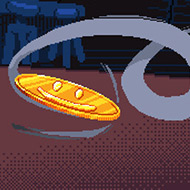
The entire interaction in Touch it Rikka comes down to a single tap, and there’s no second mechanic hiding underneath it once you start playing. That’s not a criticism so much as a description of the whole idea: a casual game built around one deliberate touch at a time rather than combos, menus, or anything you’d need to sit down and learn.
What a Session of Touch it Rikka Actually Looks Like
Sessions here are short by design. You open it, respond to whatever the screen is asking of your tap, and either keep the streak going or start over. There isn’t a deep story layered on top, and there doesn’t need to be — the appeal is entirely in the rhythm of input and response, which is what separates this kind of casual game from anything narrative-driven.
Timing is the one skill the game actually asks for. Tap too early or too late against whatever cue is on screen and the round resets, so the learning curve is really just your own sense of rhythm sharpening the more you play.
New players usually assume there’s more going on beneath the surface than there is, and spend the first few attempts overthinking a mechanic that’s meant to be read in an instant. Once that assumption drops away, the game gets noticeably easier to enjoy for what it is.
There’s no difficulty setting to fall back on either, so the only thing that actually changes your results round to round is how consistent your own timing gets. That’s a deliberately narrow design choice, and it means every mistake is on you rather than on some hidden system working against you.
Who Actually Sticks With Touch it Rikka
People who like this style of casual game tend to be the ones who play in short bursts between other things, treating a round as a minute of downtime rather than a dedicated session. Others come back specifically to beat a previous streak, which is really the only long-term goal a game this stripped-down can offer.
It’s worth being honest that a mechanic this minimal isn’t for everyone. Players looking for progression, unlockables, or a story arc will hit the ceiling of what Touch it Rikka offers fairly quickly, and that’s a fair criticism rather than a flaw to argue around.
What keeps a smaller group of players engaged past that point is simple enough to explain: a single tap, timed well, still feels satisfying on the fiftieth try the same way it did on the first, and that consistency is the entire pitch.
Touch it Rikka doesn’t try to be more than it is, and judged on those terms — a single, well-timed tap repeated until you miss — it does exactly what a game this compact is supposed to do.